Core Philosophy
This platform's architecture and tooling were chosen for this project's
specific requirements: a content-heavy, performance-critical site with
minimal interactivity. That led to avoiding heavy third-party UI
libraries, generic CSS frameworks, and unnecessary client-side
JavaScript execution, not as a fixed rule, but because none of them
served this particular target. Every byte is optimized to serve content
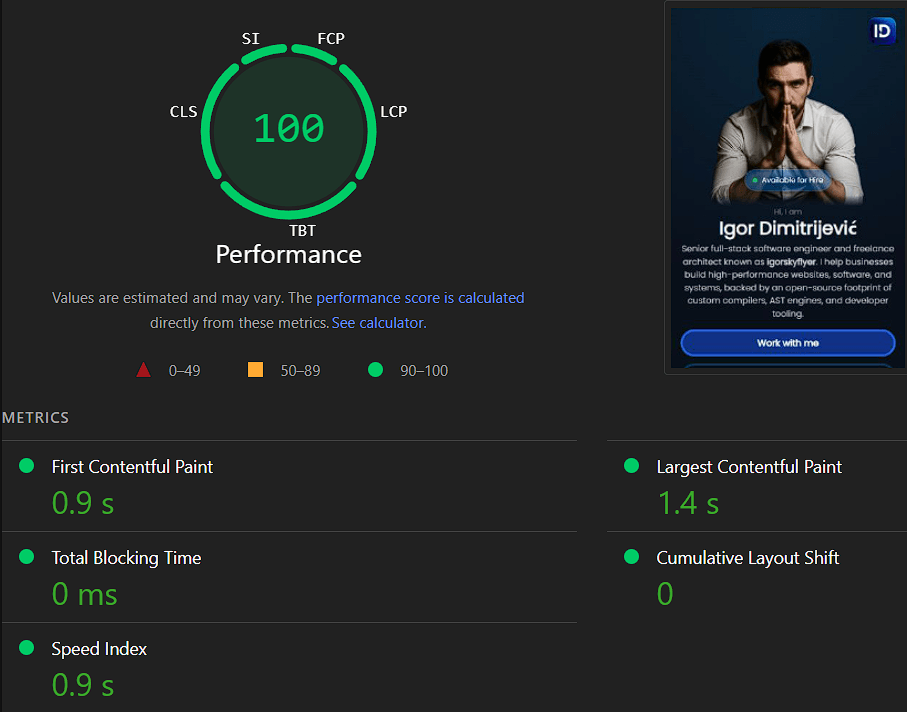
instantly, consistently achieving a100 PageSpeed Insights
score. Performance,security, and
accessibility budgets were set before the first line of
code was written, and the results documented on this page were the
target from the outset, not a byproduct.
The Build Stack
- Astro 7+: leveraged for its component islands architecture, static site generation, and type-safe Content Collections.
- Zero CSS Frameworks: styles are written in native, scoping-aware CSS using modern layout primitives without preprocessors or utility frameworks.
- Minimal JavaScript: client-side scripting is eliminated wherever possible, relying entirely on native HTML rendering and static output.
- Accessible by Default: every animation and transition on this site is switched off automatically when a visitor's system is set to reduced motion, a deliberate choice made to respect the needs of people with vestibular disorders, motion sensitivity, and other conditions where movement on screen can cause real discomfort, not just an accessibility checkbox ticked in passing.
Custom Component Architecture
Component architecture is chosen per project rather than defaulting to
external libraries: here, the interface is built from custom-crafted
internal components and packages from the
@igorskyflyer
ecosystem, developed for maximum control and consistency on a site where
minimal JavaScript was the priority.
Edge Caching Strategy
Resource delivery is optimized via granular cache-control headers matched to asset volatility:
- Static Assets & SVGs: publicly cached with extended max-age tolerances.
- Astro Bundles: immutable caching for compiled assets to maximize repeat-visit performance.
- Typography: long-term caching for font files to eliminate layout shift and redundant network overhead.
- Blog Paths: structured TTL configurations balancing content freshness with edge delivery speed.
Security & Hardening
The application layer implements defense-in-depth security policies through strict response headers:
- Content Security Policy (CSP): enforces granular script execution boundaries, frame restrictions, and trusted asset sources.
- Permissions Policy: explicitly revokes access to unused browser APIs and hardware sensors -all in this case.
- Origin Isolation: enforces cross-origin resource, opener, and embedder policies alongside strict frame denial and content-type sniffing protection.
- No Analytics or Ad Tracking: the site loads no analytics or advertising scripts. The contact form uses hCaptcha for spam prevention and Web3Forms as a form backend. The only third-party services in use are scoped to that single page.
Verified Results
These are not self-assessed, third-party scans confirm the outcome. Snapshot taken September 8, 2026, scores may shift as tooling and dependencies update:
SecurityHeaders.com:
A+ rating, coveringContent-Security-Policy,
Permissions-Policy,Referrer-Policy,
X-Content-Type-Options, X-Frame-Options, and
Strict-Transport-Security.
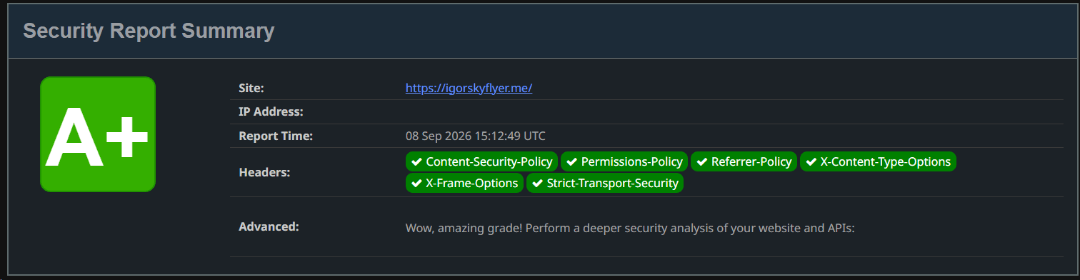
This result also places the site in SecurityHeaders.com's Hall of Fame,
reserved for sites that clear the
A+ bar (sorted by scan time).

Context from SecurityHeaders.com's own grand totals: across
392,360,627
scanned sites, only 9,050,753 land in the A+
tier, about 2.3%. The single largest group by far is
F, at 176,094,581 sites, roughly
44.9%, nearly half of everything the tool has ever scanned.
An A+
result puts a site in the top 2.3%, ahead of essentially
every other grade combined.
Sidenote: this distribution is a concerning signal for the Web at large; security headers are a well-documented, low-cost defense, yet the largest single group of scanned sites still fails the baseline. It points to a gap in awareness and training rather than a gap in tooling, the mechanisms exist and are free to adopt, what is missing in most cases is the knowledge that they should be.

Report-Uri CSP Analyser:
Analysis of theContent-Security-Policy header returned a
clean result, with all directives correctly scoped and no critical
misconfigurations flagged.

PageSpeed Insights (mobile):
100/100 across Performance,
Accessibility,Best Practices, and
SEO, plus a 2/2 pass on the newer
Agentic Browsing check. Only the mobile report is shown here, mobile is
the harder target since it runs on throttled network and
CPU conditions. Desktop results meet or exceed
these numbers every time. The results for Core Web Vitals on mobile are as
follows: